

What is the difference between pendent and upright sprinklers?
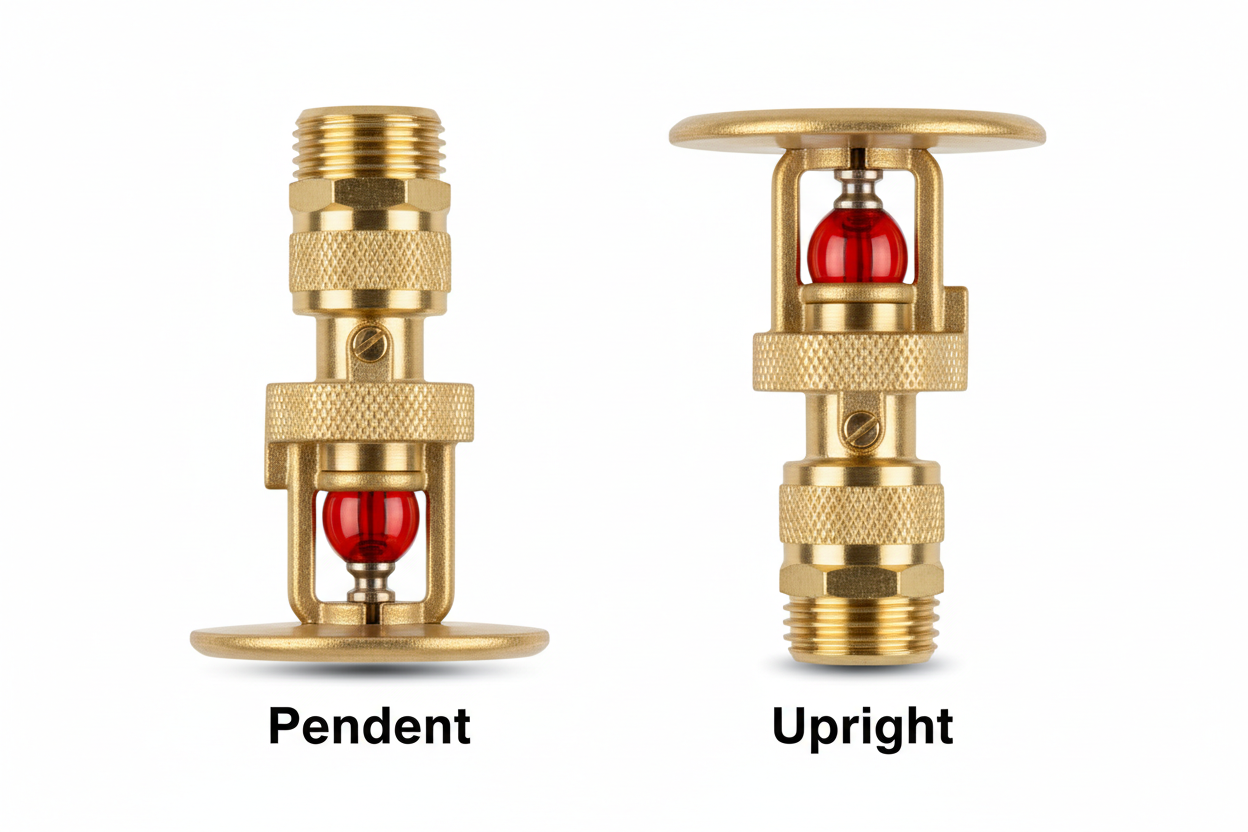
While they may look similar—both are typically made of brass, feature a glass bulb, and have threaded connections—they are not interchangeable. Installing the wrong type in the wrong orientation can result in a system that fails to control a fire, leading to failed inspections and potential liability.
As a professional , Hengdun Firefighting is here to clear up the confusion. This guide compares Pendent vs. Upright Sprinklers, explaining their mechanics, applications, and why you must choose the right one for your specific ceiling type.
 Understanding Pendent Fire Sprinklers
The is the most recognizable type found in commercial buildings. As the name suggests, it hangs down from the water pipe.
Design & Functionality
A pendent sprinkler is designed so that the water stream hits the deflector plate and sprays downward in a circular, umbrella-shaped pattern. The deflector is usually flat or slightly curved downwards to aid this distribution.
Best Applications
You will typically find pendent sprinklers in buildings with finished ceilings, such as:
-
Corporate Offices
-
Hotels
-
Schools
-
Retail Stores
In these settings, the piping is hidden behind a drop ceiling or drywall. Only the sprinkler head (and often a decorative escutcheon plate) is visible, offering a cleaner aesthetic.
Understanding Upright Fire Sprinklers
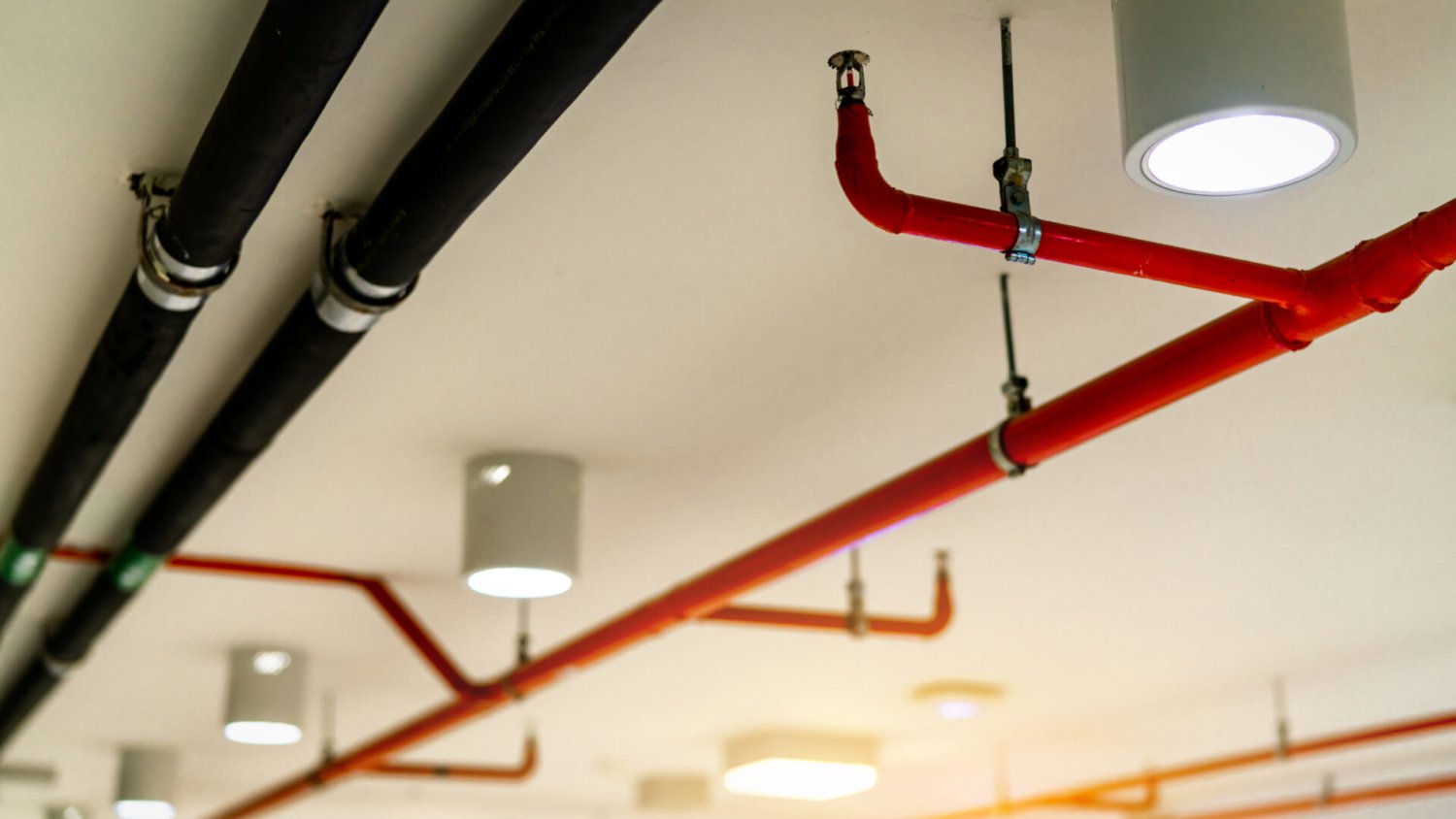
Automatic fire sprinkler safety system and black water cooling supply pipe. Fire Suppression. Fire protection and detector. Fire sprinkler system with red pipes hanging from ceiling inside building.
The is the opposite. It sits on top of the water pipe and points toward the ceiling.
Design & Functionality
When an upright sprinkler activates, the water shoots upward, hits the deflector, and is redirected downward in a hemispherical spray pattern. The deflector on an upright head is distinctively curved or “cupped” to effectively turn the water back down towards the floor.
Best Applications
Upright sprinklers are the go-to choice for exposed piping environments, such as:
-
Warehouses
-
Parking Garages
-
Mechanical Rooms
-
Steel Beam Attics
The 4 Main Differences: Pendent vs. Upright
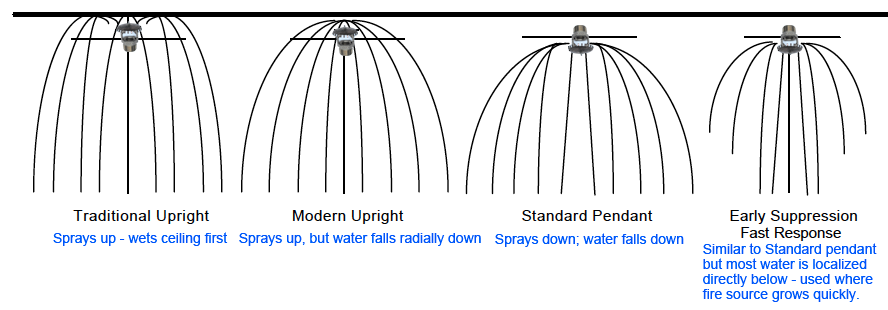
To choose the correct component, you need to understand these key technical differences.
1. Water Distribution Pattern
While both cover a specific floor area, they achieve it differently. Pendent heads spray down directly. Upright heads shoot up and deflect down. This mechanical difference means the deflectors are shaped differently.
2. Obstruction Handling
This is a critical factor for engineers. Upright sprinklers are generally better suited for ceilings with obstructions (like beams, ducts, or trusses). Because they sit higher on the pipe, the water pattern develops higher up, allowing it to spray over and around structural elements more effectively than a pendent head might.
3. Sediment Blockage Risks
Over time, rust, sludge, and sediment can build up inside fire sprinkler pipes.
-
Pendent Head Risk: Since the head hangs at the bottom of the pipe, gravity can pull debris into the nipple, potentially clogging the orifice.
-
Upright Head Advantage: The head sits on top of the pipe. Sediment settles at the bottom of the pipe, meaning the water flowing into the upright sprinkler is cleaner, reducing the risk of blockage. This makes uprights preferred for older systems or dry pipe systems.
4. Accessibility & Installation
Pendent sprinklers in finished ceilings are harder to access for maintenance once the drywall is up. Upright sprinklers in open ceilings are generally easier to inspect and replace using a .
Common Installation Mistakes to Avoid
Can I install a pendent sprinkler in an upright position? Absolutely NOT.
If you flip a pendent sprinkler upside down (pointing up), the water will hit the deflector and spray mostly onto the ceiling, not the fire below. The same applies to installing an upright sprinkler downwards; the water will hit the roof of the mechanism and fail to distribute properly.
Safety Rule: Always check the deflector stamp. It will be marked “SP” (Standard Pendent) or “SU” (Standard Upright).
Reliable Solutions from Hengdun Firefighting
Whether your project requires the sleek look of a pendent head or the rugged utility of an upright model, quality matters.
At , we manufacture:
-
Certified Brass Construction: For superior corrosion resistance.
-
Wide Range of Options: From standard response (red bulb) to high-temperature (blue bulb) heads.
-
Global Compatibility: Available in various thread sizes (1/2″, 3/4″) and K-Factors.
FAQ: Selecting the Right Head
Do pendent and upright sprinklers cost the same? Yes, generally, the manufacturing cost and wholesale price for standard brass pendent and upright sprinklers are very similar. The cost difference usually comes from installation labor and accessories (like escutcheons for pendent heads).
Can I use both types in the same building? Yes. A building might use pendent sprinklers in the office areas (finished ceiling) and upright sprinklers in the storage room or basement (exposed ceiling).
How do I identify the type visually? Look at the deflector. A Pendent deflector is flat or curved down like a mushroom. An Upright deflector has bent “ears” pointing down or is cupped to catch water.
Conclusion
The battle of Pendent vs. Upright Sprinklers isn’t about which is “better”—it’s about which is “correct” for your ceiling architecture. Pendent is for finished looks; Upright is for exposed utility and obstruction management.
Ensure your project is safe and compliant by sourcing from a reputable factory.
Need a quote for your project list? today for wholesale pricing on ISO-certified fire sprinklers.