

However, selecting the right sprinkler is not just about choosing a brand; it’s about understanding the thermal sensitivity of the device. As a professional , we often see confusion between fast response fire sprinklers (Quick Response) and standard response sprinklers. In this guide, we decode the technical differences and help you understand which one your project requires.
Understanding Standard Response Sprinklers
Standard response sprinklers have been the industry baseline for decades. They are primarily designed for property protection.
-
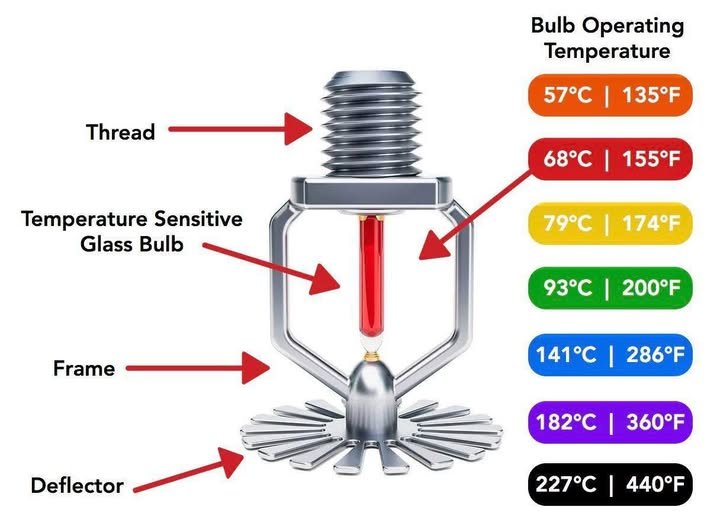
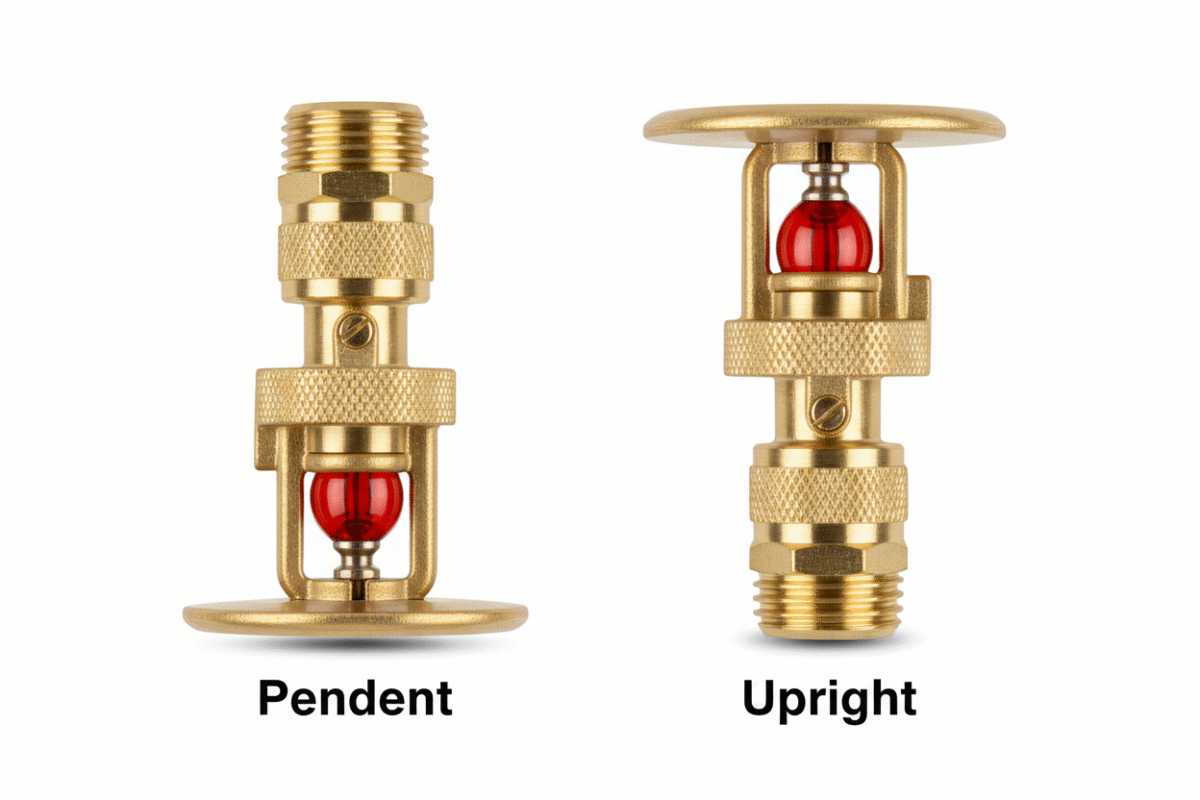
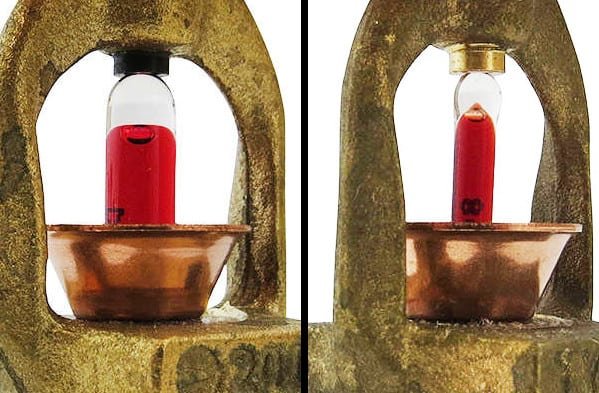
Thermal Element: They typically utilize a 5mm glass bulb. Because the bulb contains a larger volume of liquid and glass, it takes longer to absorb heat and shatter.
-
Primary Objective:
Understanding Fast Response (Quick Response) Sprinklers
—often referred to as Quick Response (QR) sprinklers—are designed for life safety.
-
Thermal Element: They feature a 3mm glass bulb. The smaller volume allows the heat-sensitive liquid to react significantly faster to a rising temperature.
-
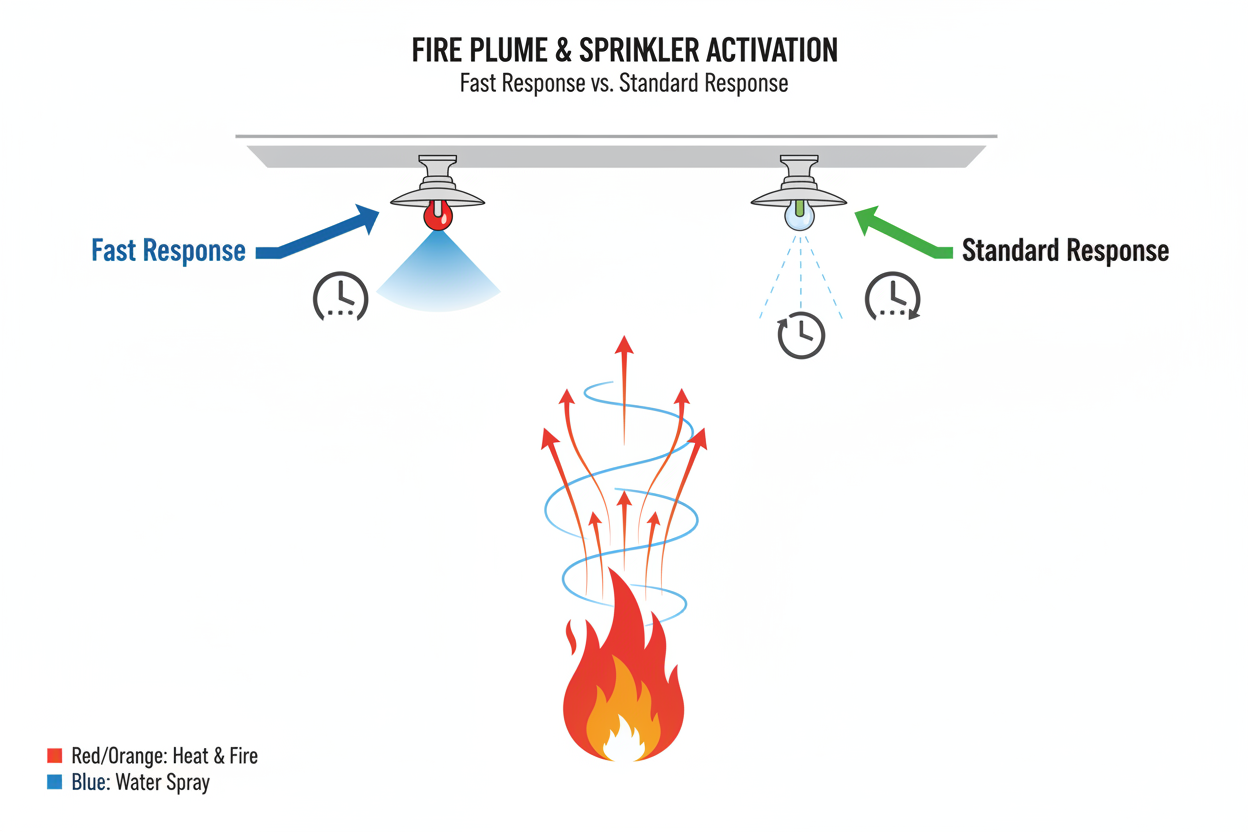
Primary Objective: Because they trigger much earlier, they keep the room temperature low and prevent the fire from reaching “flashover.” This provides building occupants, such as students in a school or elderly residents in a nursing home, with precious extra minutes to escape.
The Science: Response Time Index (RTI) Explained
Engineers use a metric called the Response Time Index (RTI) to measure the thermal sensitivity of a sprinkler.
-
Fast Response: Has an RTI of 50 or less (meters-seconds)^1/2.
-
Standard Response: Has an RTI of 80 or more (meters-seconds)^1/2.
A lower RTI value indicates a more sensitive device. By mastering the balance between RTI, K-Factor, and bulb sensitivity, a high-end can be optimized for specific building hazards.
NFPA Guidelines: Where to Use Which Type?
According to NFPA 13 standards, the selection is strictly regulated based on the hazard level of the building:
-
Light Hazard Occupancies: Schools, hotels, hospitals, and office buildings must use quick response sprinklers because the priority is saving lives.
-
Ordinary/Extra Hazard Occupancies: Warehouses and industrial plants often use standard response sprinklers to ensure that the water discharge is optimized for controlling heavy fuel loads.
Crucial Note: You should never mix fast and standard response sprinklers in the same room. Mixing them can confuse the fire’s heat plume and lead to an ineffective suppression pattern.
Why Choose Hengdun Sprinklers?
As a dedicated , Hengdun provides precision-engineered sprinklers that meet international standards:
-
Certified Precision: Our glass bulbs are sourced to provide exact RTI performance.
-
Durable Finishes: High-quality brass and chrome plating ensure your systems remain operational for decades.
-
Full Range: We provide both 3mm (QR) and 5mm (SR) options to match your project’s engineering requirements.
Need professional advice for your project?