

types of fire sprinkler heads is not just a matter of compliance; it is a critical decision that impacts the safety of lives and property. Whether you are a contractor outfitting a new hotel or a procurement manager for a warehouse, understanding the nuances between different sprinklers is essential.
What is the difference between pendent and upright sprinklers? How do you choose the right temperature rating? This guide explores the most common sprinkler types—including pendent fire sprinklers, upright fire sprinklers, and specialty options like concealed fire sprinklers—to help you make informed purchasing decisions.
If you are looking for a reliable partner for your next project, to explore our comprehensive range of ISO-certified fire protection solutions.
Common Fire Sprinkler Head Types Explained
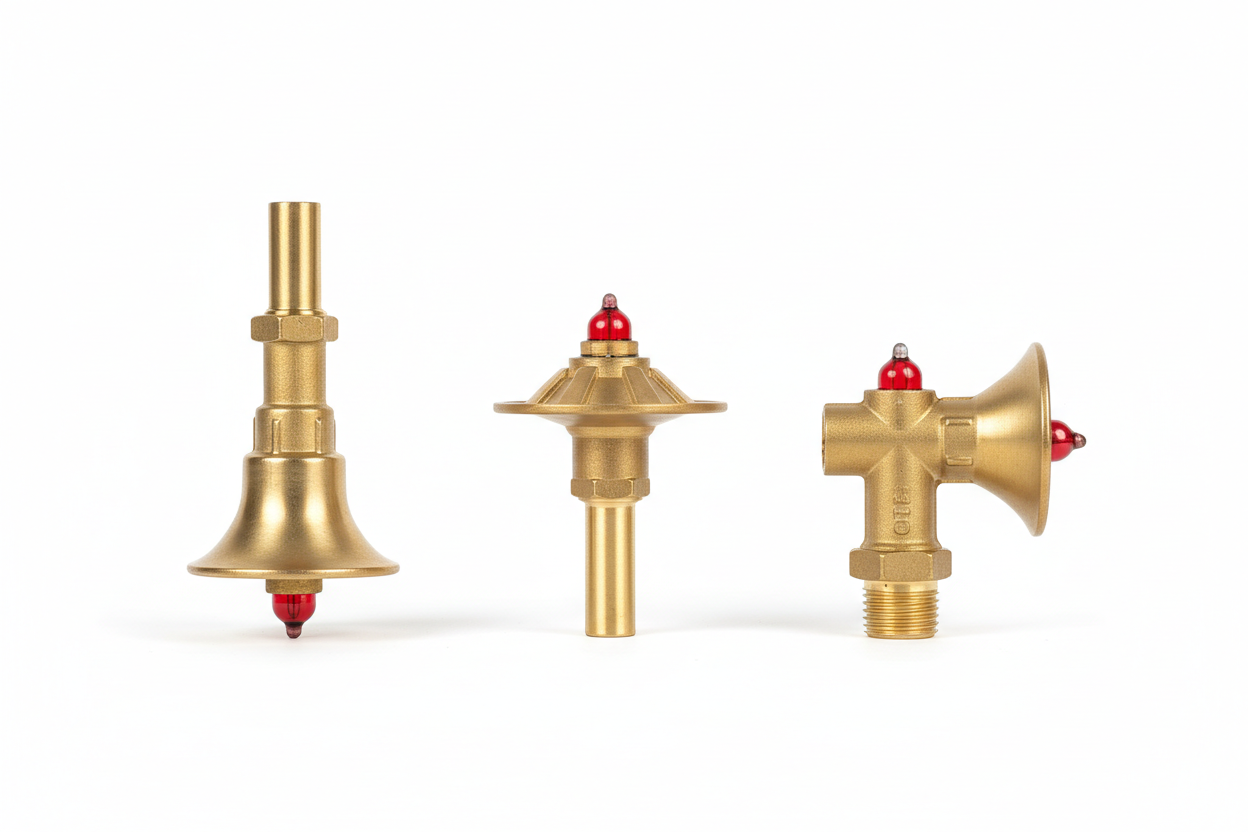
Fire sprinklers may look similar, but their design and function vary significantly based on the installation environment. As a leading , we categorize them into three primary types based on their orientation and water distribution pattern.
Pendent Fire Sprinkler Heads (Most Popular Choice)
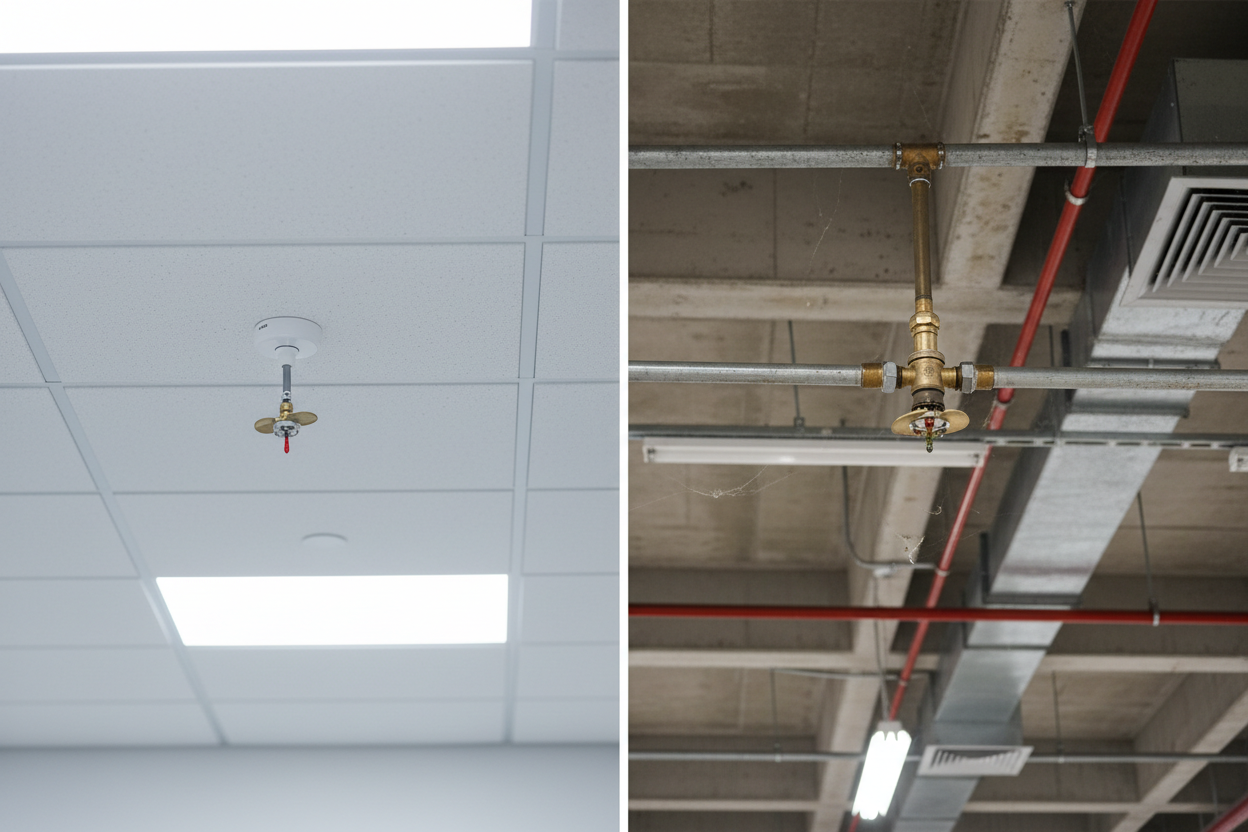
The is the most widely used type in modern buildings. Designed to hang down from the ceiling piping, it directs water downward in a circular pattern.
-
Best for: Offices, hotels, and residential buildings where pipes are hidden above a drop ceiling.
-
Key Feature: The water deflector is curved downwards to distribute water efficiently over the fire source.
Upright Fire Sprinkler Heads (For Open Ceilings)
Unlike the pendent type, the sits on top of the pipe and sprays water upward against a solid deflector, which then disperses it in a dome shape.
-
Best for: Warehouses, factories, and parking garages with exposed piping.
-
Key Feature: Ideal for areas where obstructions like beams or ducts might block a pendent sprinkler’s spray pattern.
Sidewall Fire Sprinkler Heads (Wall-Mounted)
When ceiling installation is not feasible, sidewall fire sprinklers offer a practical solution. They are mounted on the wall and project a half-circle spray pattern into the room.
-
Best for: Small rooms, hallways, or areas with limited ceiling access.
-
Key Feature: Designed with a special deflector to throw water forward and away from the wall.
Specialty Sprinklers: Concealed and ESFR
For projects with specific aesthetic or high-hazard requirements, standard sprinklers may not suffice. Specialized options like and ESFR systems provide tailored solutions.
Concealed Fire Sprinklers for Aesthetic Spaces
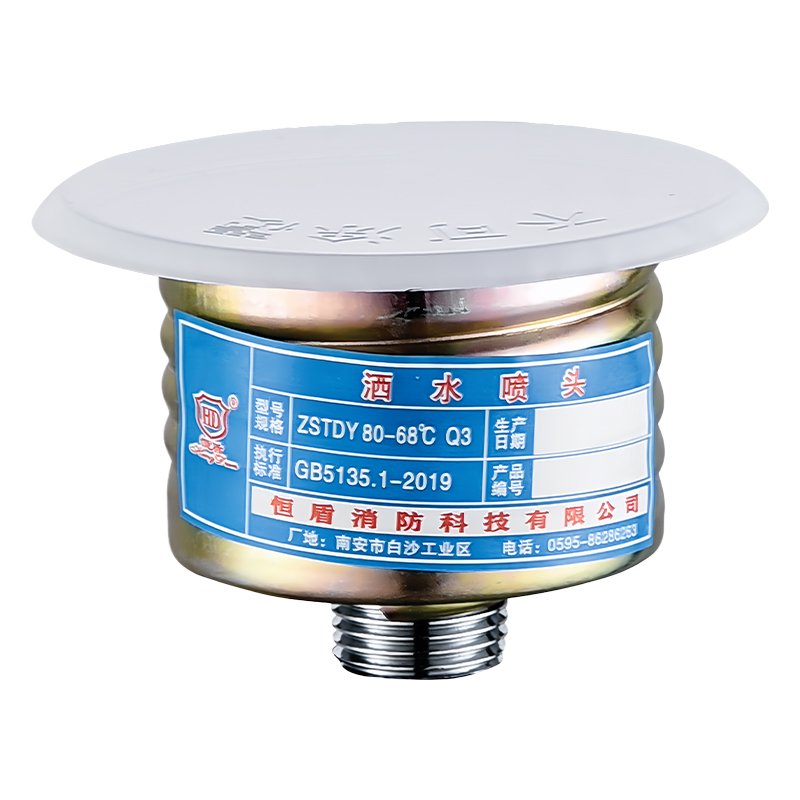
Architects and designers often prefer concealed fire sprinklers for luxury hotels, corporate offices, and high-end residences. These sprinklers are recessed into the ceiling and covered by a flat plate that matches the ceiling color.
When to use concealed sprinklers? Use them when aesthetics are a priority. In the event of a fire, the cover plate falls off when the temperature rises, exposing the sprinkler head to activate.
ESFR Sprinklers for High-Rack Warehouses
are engineered for challenging environments like high-rack storage warehouses. Unlike standard sprinklers that control a fire, ESFR heads are designed to suppress it completely by releasing a high volume of water directly onto the source.
-
Advantage: Eliminates the need for in-rack sprinklers, saving installation costs and maximizing storage space.
-
Target Audience: Logistics centers and large-scale distribution hubs.
Pendent vs. Upright Sprinkler: What is the Difference?
Choosing between a pendent fire sprinkler and an upright fire sprinkler is one of the most common questions we receive. Here is a quick comparison to help clarify.
| Feature | Pendent Sprinkler | Upright Sprinkler |
|---|---|---|
| Orientation | Hangs down from pipe | Sits upright on pipe |
| Deflector Shape | Flat or slightly curved down | Curved or cupped |
| Visibility | Visible or concealed | Always visible |
| Application | Finished ceilings (Offices) | Exposed ceilings (Warehouses) |
| Debris Risk | Lower risk of sediment blockage | Debris settles in pipe, not head |
Understanding these differences ensures your operates efficiently. Installing an upright sprinkler in a pendent position (or vice versa) will result in improper water distribution and fail inspection.
Understanding Fire Sprinkler Temperature Ratings
Have you ever noticed that the glass bulb inside a sprinkler comes in different colors? These colors indicate the —the specific heat level at which the sprinkler will activate.
How to identify fire sprinkler temperature? Refer to this standard color code:
-
Red Bulb (Standard Response): Activates at 68°C (155°F). Used in most offices and homes.
-
Yellow/Green Bulb (Intermediate): Activates at 79°C or 93°C. Suitable for kitchens or glass atriums.
-
Blue Bulb (High Temperature): Activates at 141°C. Essential for industrial ovens or factories.
Selecting the wrong temperature rating can lead to accidental activation or delayed response during a fire. Always consult your for technical data sheets.
Why Choose Hengdun as Your Fire Sprinkler Manufacturer?
When sourcing wholesale fire sprinklers, quality and reliability are non-negotiable. Hengdun Firefighting stands out as a premier partner for global B2B buyers.
-
Certified Quality: Our products are manufactured under strict ISO 9001 standards and hold CCC certifications.
-
Premium Materials: We use high-grade to ensure corrosion resistance and longevity.
-
Capacity: With a 20,000+ sqm factory, we can handle large-scale OEM orders with competitive lead times.
to request a quote or download our latest product catalog.
FAQ: Common Questions About Fire Sprinkler Selection
Can I replace an upright sprinkler with a pendent one? No. Pendent fire sprinklers and upright sprinklers have different deflectors designed for specific water flow patterns. Interchanging them will compromise the system’s effectiveness.
What is the difference between fast response and standard response? Fast response sprinklers have a thinner glass bulb (RTI < 50) and activate quicker, making them mandatory for life safety in residential areas. Standard response heads are used for property protection in commercial spaces.
Do I need a fire sprinkler guard? Yes, if the sprinkler is installed in an area prone to mechanical impact, such as a gym, warehouse, or low-ceiling garage. A protects the fragile glass bulb from breaking accidentally.
Conclusion
Selecting the right types of fire sprinkler heads—from standard pendent models to specialized ESFR systems—is crucial for effective fire protection. By understanding the differences in orientation, temperature rating, and application, you can ensure your project meets all safety standards.
As a trusted manufacturer, Hengdun Firefighting is committed to providing high-quality, durable solutions for your business.
Ready to upgrade your fire safety inventory?